
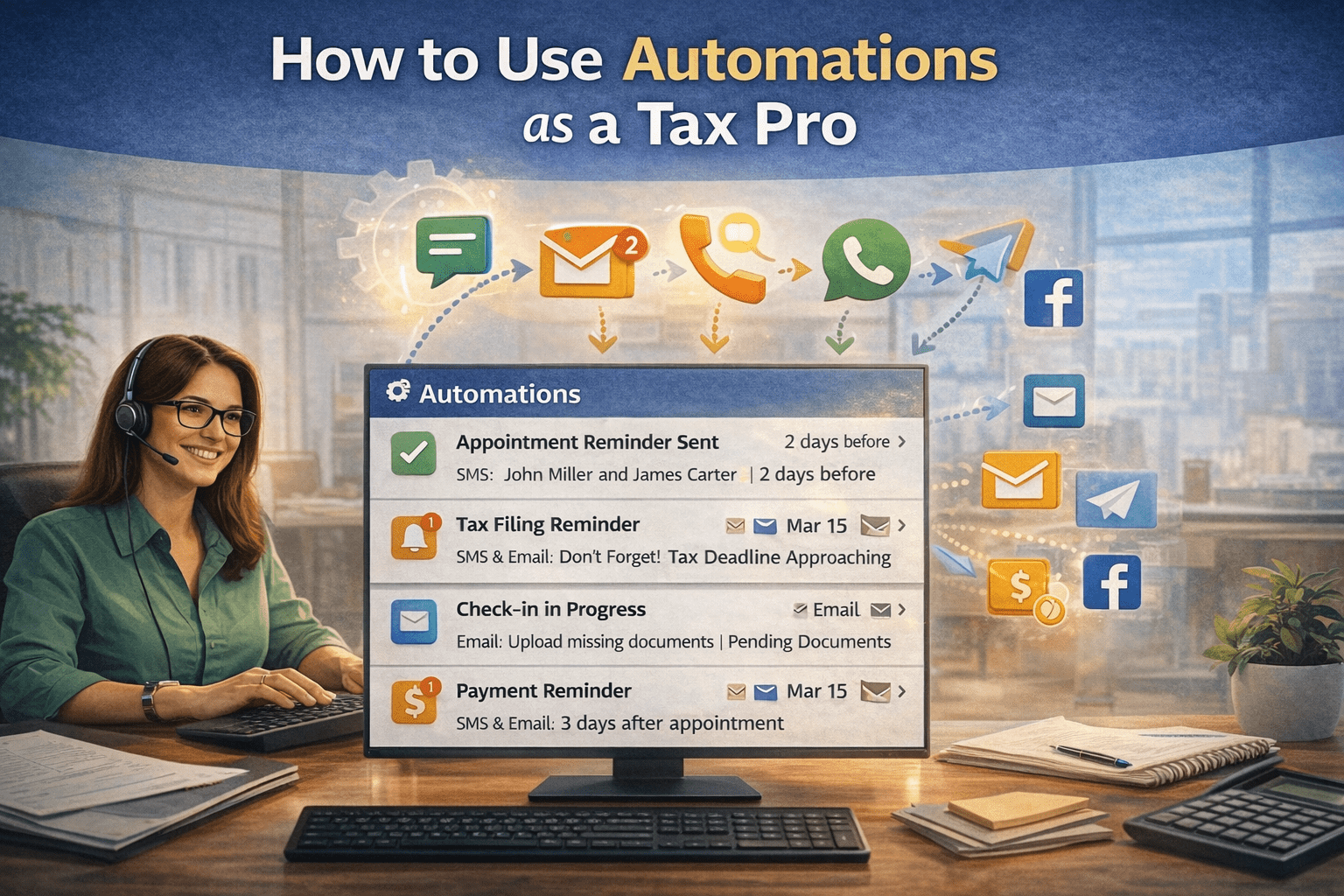
In today’s fast-paced tax environment, automation is no longer a luxury—it’s a competitive advantage. Tax professionals face intense seasonal workloads, strict deadlines, and constant client communication. Automations allow tax pros to work smarter, reduce manual tasks, and deliver a better client experience while increasing revenue and efficiency.
One of the most effective ways to use automation as a tax professional is by streamlining client communication. Instead of manually sending reminders and updates, automations can handle appointment confirmations, document requests, tax deadline alerts, and payment reminders through SMS, email, or calls. This ensures clients stay informed without requiring constant follow-ups from your team.
Lead management is another area where automation delivers immediate value. When a new lead contacts your firm, an automated workflow can instantly respond, schedule a consultation, and assign the lead to the appropriate staff member. Fast responses increase trust and dramatically improve conversion rates, especially during peak tax season when competition is high.
Client onboarding can also be fully automated. Tax pros can send welcome messages, intake forms, document checklists, and instructions automatically as soon as a client signs up. This reduces back-and-forth communication, speeds up the preparation process, and sets clear expectations from the start.
During tax season, automation helps manage high volumes without sacrificing accuracy. Automated task assignments, status updates, and progress notifications keep both staff and clients aligned. Clients receive updates like “Documents Received” or “Return in Progress,” while internal teams stay focused on completing returns efficiently.
Automations are also powerful for renewals and long-term retention. After tax season ends, automated follow-ups can keep clients engaged year-round with reminders for estimated payments, next-year planning, and annual check-ins. This consistent communication strengthens relationships and increases repeat business.
Ultimately, automation allows tax professionals to scale without burnout. By reducing repetitive tasks, minimizing human error, and improving responsiveness, tax pros can focus on delivering expert advice instead of managing logistics.
For tax professionals looking to grow, automate, and modernize their practice, implementing automations is one of the smartest decisions they can make.